Hello, babies. Welcome to Earth. It’s hot in the summer and cold in the winter. It’s round and wet and crowded. At the outside, babies, you’ve got about a hundred years here. There’s only one rule that I know of, babies — God damn it, you’ve got to be kind.
It’s the birthday of poet Sharon Olds | Writer’s Almanac
It’s the birthday of poet Sharon Olds (books by this author), born in San Francisco (1942). When she was eight years old, her teacher asked the students to write poems, and Olds handed in a poem she had read in the post office, which began: “Neither wind nor rain nor gloom nor dark of night …” When the teacher demanded to know whether she has written it, she explained that of course she had, because it was in her handwriting. It was the first time she realized that writing a poem meant actually making it up, not just writing it down. She said: “My early influences for good writing were the Psalms, and for bad writing were the Hymns. Four beats, the quatrains, that form. […] I didn’t know until I was 55 that my craft was the craft of the Hymns I had grown up singing. I was writing in a way that felt comfortable to me.”
Perfume seller wins Bruntwood prize for play about welfare cuts
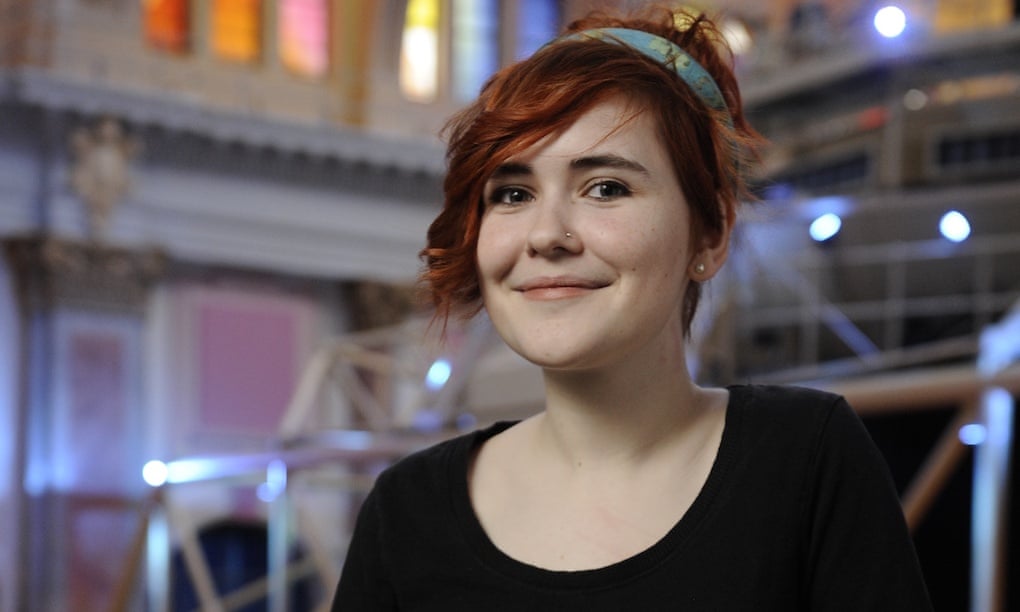
The UK’s biggest playwriting competition has been won by Katherine Soper, a 24-year-old perfume seller, for a play informed by what she calls the government’s “systematic assault” on disabled and mentally ill people.
Source: Perfume seller wins Bruntwood prize for play about welfare cuts
Happy Birthday Kurt Vonnegut | The Writer’s Almanac
It’s the birthday of a writer who was also a veteran (11/11 is Veteran’s Day in the United States, which honors Americans who have served their country in the armed forces) Kurt Vonnegut (books by this author), born in Indianapolis, Indiana, on this day in 1922. He’s the author of Slaughterhouse Five (1969), Cat’s Cradle (1963), Breakfast of Champions (1973), and Timequake (1997).
 He said that as the youngest child he was always desperate to get some attention at the supper table and so he worked hard to be funny. He’d listen studiously to comedians on the radio, and how they made jokes, and then at family dinner time, he’d try to imitate them. He later said, “That’s what my books are, now that I’m a grownup — mosaics of jokes.”
All his life he loved slapstick humor. He told an interviewer that one of the funniest things that can happen in a film is “when somebody in a movie would tell everybody off, and then make a grand exit into the coat closet. He had to come out again, of course, all tangled in coat hangers and scarves.” When he was on the faculty at the Iowa Writers’ Workshop, he told his students that they were there learning to play practical jokes. He said, “All the great story lines are great practical jokes that people fall for over and over again.”
I discovered Clowns Without Borders when I was looking online for evidence of laughter in South Sudan
I heard in a news story today on the radio, probably, NPR, that there are 15,000 people living in tents in South Sudan and 1,500 children have been abducted as child soldiers and many have died from starvation and disease. I couldn’t help but ask myself, is there any hope here? Is there any hope in the story of the 1-year-old boy whose name translates into “wholeness,” because, as his mother states, ‘while they’re fighting out there, we’re whole family in here.’
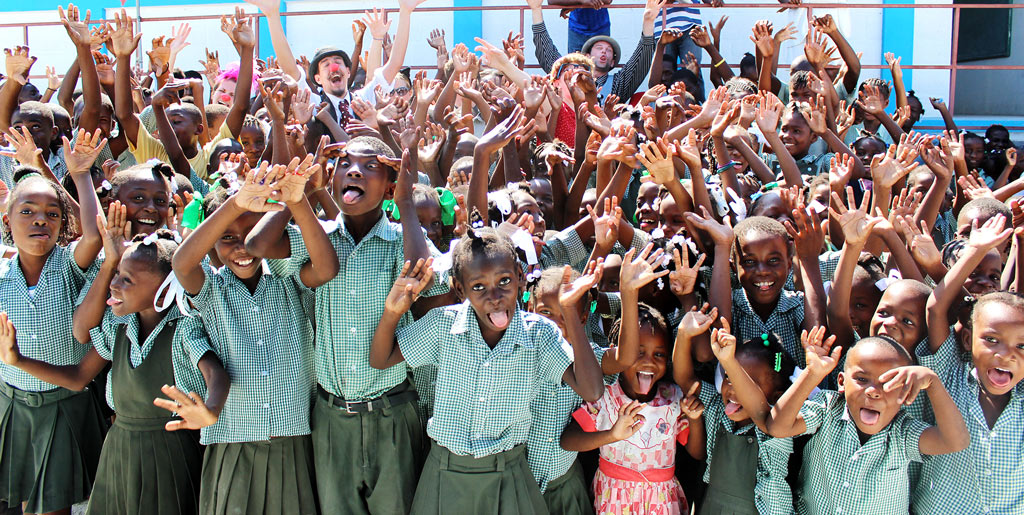
 Then I found this ::: Clowns Without Borders was founded in Barcelona in July 1993. The idea began when Tortell Poltrona, a professional clown in Spain, was invited to perform in a refugee camp in Croatia. This performance unexpectedly attracted audiences of more than 700 children, proving to Poltrona that there is a great need for clowns and entertainment in crisis situations. He founded Clowns Without Borders to offer humor as a means of psychological support to communities that have suffered trauma. Read the UNHCR interview with Tortell Poltrona.
You might think that clowns are scary or silly, but check out Clowns Sans Frontiers’ Code of Ethics:
Code of Ethics
The objective of this code is to provide a series of written guidelines of ethics for all clowns and artists who collaborate with Clowns Without Borders.
- The clown or collaborating artist will hold as fundamental objectives to better the situation of children who live in crisis situations of whatever type (conflict, natural disaster, social inequalities, etc.) in whatever part of the world.
- The main beneficiaries of CWB projects are children living in situations of crisis and the clown or collaborating artist will make no distinction between them for reasons of race, age, religion, culture, social situation or any other categorization when offering his/her work.
- For clowns and collaborating artists participating in CWB projects, volunteerism is the general rule.
- In respect to the clown/artist’s public image, he/she will not use the participation in humanitarian activities as a means to promote their professional career, separating clearly at all times such activities and not using his humanitarian work for publicity purposes or to promote his/her professional career.
- The clown or collaborating artist will not use their humanitarian activities to impart personal ‘points of view’ to the destination populations of the projects and will limit themselves to sharing their artistic activities. The artist will not attempt to “educate” the population, refraining from any “evangelical” activities.
- The clown or collaborating artist, when choosing the contents of his/her performances and workshops, will consider the sensibilities of the destination population, taking into account their culture as well as the delicate situation in which they are living.
- The clown or collaborating artist when working with CWB projects sees and shares difficult situations. Their work does not end when they return home. They should testify in the measure possible all situations of injustice that they have witnessed.
- When participating in a project, during our performances and in our contact with the public, we remain clowns and artists, and this is the sole method with which we express and experience the validity of our actions.
- We remain vigilant and attentive that the name, logo, and identity of Clowns Without Borders will not be will not be used as a vehicle for remuneration.
- In the matter of seeking financial support, we remain attentive to the ethical values and the respect of human rights of our sponsors and partners.
Learn more about this amazing group here: About Us ⋆ Clowns Without Borders
The new U.S. poet laureate will make your brain work. Plus 4 other great things to know about him.
As a child, Herrera lived a nomadic life out of tents and trailers on farm roads throughout California. His folks, both migrant farmworkers from Mexico, moved with the seasons of agriculture for the often hazardous and thankless work in the fields.
Source: The new U.S. poet laureate will make your brain work. Plus 4 other great things to know about him.

I wish only the best for you.
Peace,
love,
joy.
When we have it all,
We turn over the next morning
To face the new day.
We put on our best clothes to impress someone,
We think we can feel a change,
We think that what we could not hold onto yesterday
We now have in our hands,
Then a bird lands on the window sill,
And stands alone
And makes us realize
What we grasped so tightly yesterday,
Is exactly what we are holding today.
Christopher Zurcher May 2015
Crow at sunset
The orange sunset
reflected on the glossy underside of the crow’s wing
caught my eye.
Kurt Vonnegut’s ‘Cat’s Cradle’ getting TV treatment
Hipsters rejoice! IM Global Television will be adapting Kurt Vonnegut’s satirical sci-fi novel Cat’s Cradle for the small screen, the studio announced Thursday.
The studio is looking for a “high-level writer/showrunner,” to develop the project alongside executive producer Brad Yonover and co-executive producer Sandi Love.
Published in 1963, Cat’s Cradle was Vonnegut’s fourth novel and focuses mainly on the topics of science, technology, and religion, satirizing in particular the nuclear arms race through the story of one family’s involvement with the atomic bomb.
Download 55 Free Online Literature Courses: From Dante and Milton to Kerouac and Tolkien | Open Culture
Here at Open Culture, we don’t just feature education in your recommended daily servings of culturally wide-ranging video, audio, text, and image — we also feature it in a form that goes deep: whole courses you can download to your computer or mobile device of choice and experience at your own pace. If you never quite studied all the literature you wanted to — or if you simply can’t get enough study of the stuff — pay a visit to our collection of over 50 free literature courses online.

Photographer Brittany Wright Captures Foods in Colorful Gradients | Colossal
Photographer and food enthusiast Brittany Wright sets up intricate culinary still lifes that focus primarily on the differentiation of fruits’ and vegetables’ coloration. Wright captures a rainbow of colors in foods ranging from heaps of apples to carrots plucked freshly from the earth. Each photograph focuses on the produce against a stark white background, a way to display the food’s vibrant shades without distraction.
Source: Photographer Brittany Wright Captures Foods in Colorful Gradients | Colossal
Politician Tasked With Oil Industry Oversight Gets a Paycheck From Big Oil | Mother Jones
Kurt would love irony. I love the irony. This is why my writing is sometimes sardonic.

The BP oil spill turned five years old on Monday, and as my colleague Tim McDonnell reported, we’re still paying the price: There’s as much as 26 million gallons of crude oil still on the floor of the Gulf of Mexico. But the story of the Deepwater Horizon wasn’t just about environmental devastation—it was also a story about regulation.
via Politician Tasked With Oil Industry Oversight Gets a Paycheck From Big Oil | Mother Jones.
Spalding Gray’s Catastrophe | Oliver Sachs, The New Yorker

Spalding had spent more than thirty years on “the slippery slope,” as he called it, as a high-wire performer, a funambulist, and had never fallen off. He doubted if he could continue. While I expressed hope and optimism outwardly, I now shared his doubt.
On January 10, 2004, Spalding took his children to a movie. It was Tim Burton’s “Big Fish,” in which a dying father passes his fantastical stories on to his son before returning to the river, where he dies—and perhaps is reincarnated as his true self, a fish, making one of his tall tales come true.
That evening, Spalding left home, saying he was going to meet a friend. He did not leave a suicide note, as he had so often before. When inquiries were made, one man said he had seen him board the Staten Island Ferry.Two months later, Spalding’s body was washed up by the East River. He had always wanted his suicide to be high drama, but in the end he said nothing to anyone; he simply disappeared from sight and silently returned to the sea, his mother.
Maya Angelou Stamp Quote Actually Came From Connecticut Children’s Book Author Joan Walsh Anglund
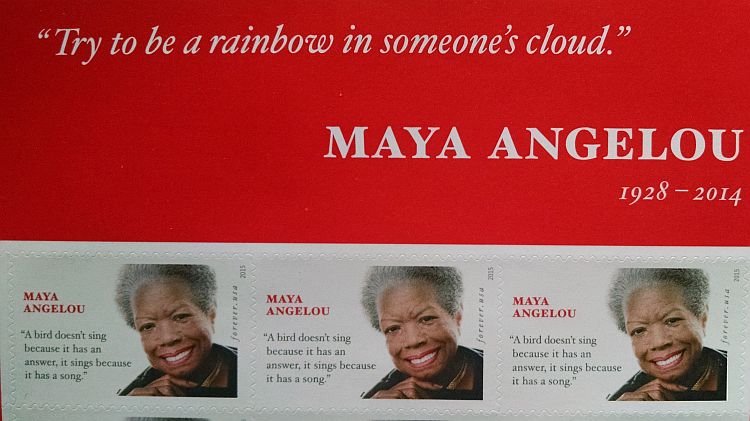
The news that the U.S. Postal Service was honoring Maya Angelou, poet, author and civil rights advocate, with her own forever stamp was welcomed by her fans. Angelou, who died last year, was a cultural icon and mother figure to a generation of writers.
Jabari Asim, associate professor of writing, literature and publishing at Emerson College in Boston, was excited. Until he read the quote on the Angelou stamp:
“A bird doesn’t sing because it has an answer, it sings because it has a song.”
Funny thing, he had always thought the quote came from Joan Walsh Anglund, the prolific children’s book author from Connecticut.
via Maya Angelou Stamp Quote Actually Came From Connecticut Children’s Book Author – Hartford Courant.
Carbon monoxide ‘blamed’ after father and his 7 children die in their sleep | The Washington Post
Ed: First of all, can you really blame the carbon monoxide for deaths?

Just six weeks before his death, he implored his friends to cherish the time they have: “life is never promise[d] no matter how you look at it.”
via Carbon monoxide blamed after father and his 7 children die in their sleep – The Washington Post.
LIFE – TIME Photo Archive
The LIFE – TIME Archive is exactly what it sounds like. It’s am amazing collection of photography from the Time-Life series of periodicals dating back to I don’t even know when, but many years ago. Check it out. I’m sure you’ll see something that strikes your fancy.
Click on this blue link LIFE – TIME to visit this amazing resource.
The 12th Annual Smithsonian Photo Contest Finalists «TwistedSifter
The finalists of the 12th Annual Smithsonian.com Photo Contest have just been announced. Selected from over 26,500 entries, these photos were submitted by photographers from 93 different countries. Smithsonian’s photo editors selected ten finalists per category—Natural World, Travel, People, Americana, Altered Images and Mobile—and it is up to you to determine the Readers’ Choice winner. The photograph that receives the most votes between now and March 30, at 5 p.m. ET, will receive a $500 cash prize and be announced alongside the Grand Prize and category winners on March 31.

The finalists range from a serene sunrise canoe in Minnesota to a train ride in Myanmar to a vicuña wandering the grasslands of the Andes. Some moments were sought out, others captured by chance. Votes are limited to one person per 24 hours.
Our friends at Smithsonian were kind enough to share a selection of the finalists in the amazing gallery below. You can see all 60 finalists at Smithsonian.com!
via The 12th Annual Smithsonian Photo Contest Finalists «TwistedSifter.
Feed the birds
by Christopher Zurcher
I think of the miracle of life.
The beauty of nature.
I get home and on my way from the garage to the house
I hear a chirp. It’s a cardinal chirp and, sure enough, he’s there in the tree next to the feeder.
My friend the brilliant red crested finch is calling me from the pine tree.
“Hey. Man-With-The-Seeds. We’re waiting on you.”
It’s been two days and all that’s left are some husks
in the bottom of the feeder and on the ground below.
“Alright. I’ll be right out.”
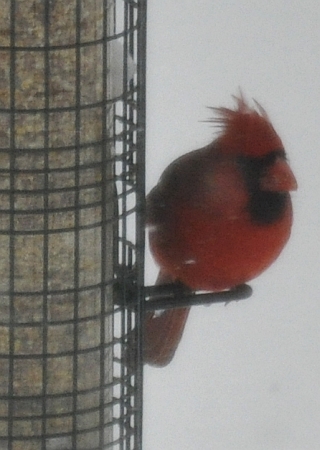 As I approach the feeder with my bucket of seeds,
the birds go crazy in the bushes.
I’ve never heard them this excited.
I pucker my lips and fake some bird sounds
as if I can tell them how pleased I am they’re here.
They continue to tweet and chirp and flutter about in the branches.
I turn up the driveway to walk back to the garage. The commotion stops.
I put the seeds on the floor of the garage and turn to watch
them return to the feeder.
At the very top of the same pine tree, the cardinal chirps
the short, shrill cardinal chirp, as if to say “thanks.”
If only I could tell him how beautiful he looks,
Bright red, dignified, important.
I go inside wondering if I he might not already know.
Readers’ travel photography competition 2015 | Travel | The Guardian
Have camera, will travel? Then Guardian Travel’s annual photography competition is for you. It’s an opportunity for you to capture the essence of your journeys around the world, and for us to showcase your work online and – at the end of the year – in an exhibition at Guardian HQ.
And the overall prize is pretty great too.
The winner of each month’s competition (who must be a UK resident) will see their shot mounted and displayed in the end-of-year exhibition for the public at the Guardian’s offices in London. Once the exhibition is finished digital printers Point 101 will send you a copy of your shot to place with pride on your own wall.
via Readers’ travel photography competition 2015 | Travel | The Guardian.


