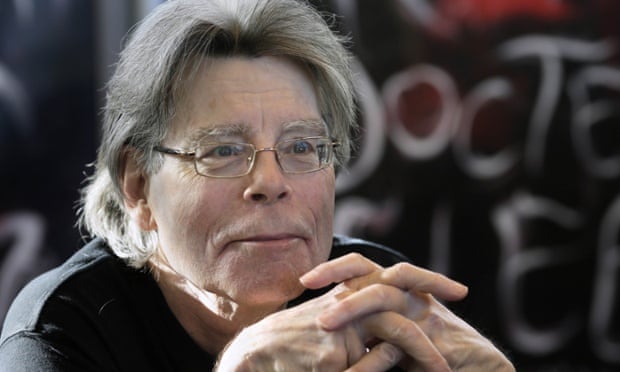
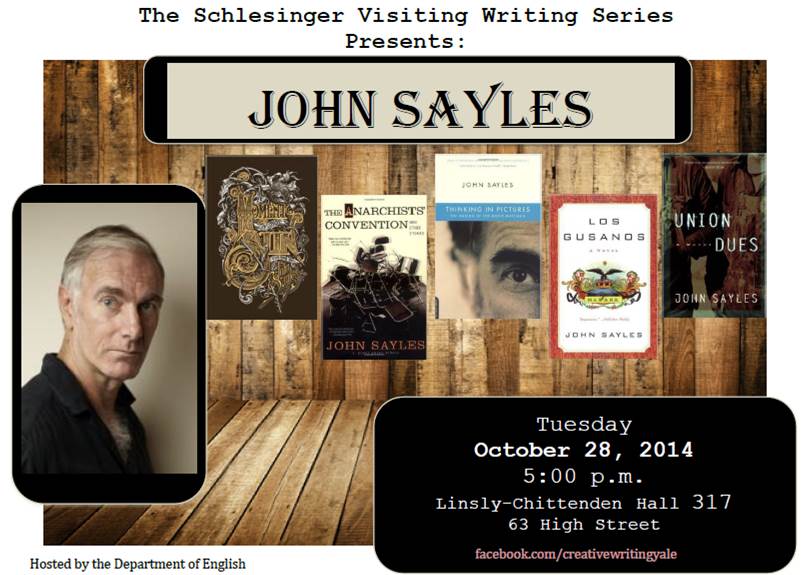
Long before Robert Stone became a National Book Award–winning novelist, he tried selling encyclopedias in rural Louisiana, only to be arrested on suspicion of being an outside agitator. Regrouping from that calamity, he pondered joining a traveling theatrical troupe putting on a Christ play. In March 2009, at our Narrative Night in San Francisco, Bob gave a hilarious and moving reading of youthful tales, included in his memoir Prime Green.
The purpose of schools, universities and education
Schools, universities and all forms of educational institution should be centers for the discovery and development of every individual’s innate and inherent skills, talents, abilities and interests.
Amateur Photographer Captures Intimate Photos Of Foxes Living In One Of The World’s Remotest Regions
When asked why he enjoys photographing wildlife, Kislov told The Huffington Post Wednesday that he “just likes to watch the animals.”
He added that he’s enjoyed taking photographs ever since he was a child.
Scroll down to see more of Kislov’s photographs. Visit his website and 500px page for a more complete collection.
via Amateur Photographer Captures Intimate Photos Of Foxes Living In One Of The World’s Remotest Regions.
Eyewitness: Turkana, Kenya | The Guardian
Women get water for their families and cattle from a 20-metre-deep borehole, in Kaitede village, in the Turkana region.This image is part of a series, Drought in Kenya, by Stefano De Luigi, one of the six shortlisted finalists in the Syngenta Photography Award 2015: Scarcity – Waste which will be on show at Somerset House, London, 10 March – 11 April 2015 Stefano De Luigi
Josef Koudelka: the man who risked his life to photograph the Soviet invasion of Czechoslovakia – in pictures | Art and design | The Guardian
After years of taking striking photos of Gypsies, the Czech photographer stood before the tanks during the 1968 invasion. He smuggled out his images, they went round the world and he fled to Britain. Here are his most poignant and powerful shots
- Josef Koudelka: Nationality Doubtful is at the Getty Center in Los Angeles from 11 November to 22 March 2015
See Rio de Janeiro’s Favelas Through the Lens of Young Residents’ Pinhole Cameras · Global Voices
A can with a little hole and some duck tape. It sounds simple, but that’s where the paradox resides. To photograph with a digital camera in auto mode, all you need to do is click. But a pinhole, the mother of all analog cameras, requires much more than that: a good dose of patience and concentration, for a start, but also an understanding of the basic principle of photography, which is controlling light. After that, some imagination, inspiration and encouragement will do the rest.
At least that is what the “Mão na Lata” (Hand on can) project is about. It consists of distributing pinhole cameras to teenagers from 12 to 18 years old in Complexo da Maré, a neighborhood in Rio de Janeiro comprising of 16 favelas where about 130,000 people live. From the crafting of the cameras, made with powdered milk cans, to the developing of the negatives, everything is done by the participants themselves, who are asked to document their community’s daily life in black and white.

via See Rio de Janeiro’s Favelas Through the Lens of Young Residents’ Pinhole Cameras · Global Voices.
Lists :: 1. Because they’re simple. 2. Because they’re playful. 3. Because they work. | Beyond The Margins
Ray Bradbury in Zen in the Art of Writing:
“[My] lists were the provocations, finally, that caused my better stuff to surface. I was feeling my way toward something honest, hidden under the trapdoor on the top of my skull.”
And in The Paris Review:
“So all of this is in your mind as a fabulous mulch and you have to bring it out. How do you do that? I did it by making lists of nouns and then asking, What does each noun mean? You can go and make up your own list right now and it would be different than mine. The night. The crickets. The train whistle. The basement. The attic. The tennis shoes. The fireworks. All these things are very personal. Then, when you get the list down, you begin to word-associate around it. You ask, Why did I put this word down? What does it mean to me? Why did I put this noun down and not some other word?”
via 1. Because they’re simple. 2. Because they’re playful. 3. Because they work. | Beyond The Margins.
Stephen King: ‘Religion is a dangerous tool … but I choose to believe God exists’ | The Guardian

Stephen King, whose forthcoming novel Revival features a Methodist minister who condemns his faith after a horrific accident, has described organised religion as “a very dangerous tool that’s been misused by a lot of people.”
In a rare and lengthy question and answer session published in the print edition of Rolling Stone, King laid out how he “grew up in a Methodist church,” but how he “had doubts” about organized religion ever since he was a child, and how “once I got through high school, that was it for me.”
Nevertheless, said the bestselling novelist, he chooses to believe in God “because it makes things better. You have a meditation point, a source of strength.” He told Rolling Stone: “I choose to believe that God exists, and therefore I can say, ‘God, I can’t do this by myself. Help me not to take a drink today. Help me not to take a drug today.’ And that works fine for me.”
For more on this story, visit: Stephen King: ‘Religion is a dangerous tool … but I choose to believe God exists’ | Books | The Guardian.
Bleeding Heart by Christopher Zurcher
Bleeding Heart
By Christopher Zurcher
flog me into submission you daily beast of ambition
beating your head against the concrete wall
of emails, text messages and phone calls.
my bleeding heart is no match for the blood you make run
from my forehead, my chewed hang nails, my nose, my heart,
my gums.
why don’t you take it out and show it to me in a broadcast not of beauty but of what’s happening in Africa or the Middle East? bleeding heart.
make me sick again and again with human rights abuses and corporate greed that pollutes the water that quenches the thirst of hundreds of millions of people, you beast, bleeding heart
quenches the thirst of you and me, our children and theirs. bleeding heart.
tell me it’s all in the name of nutrition, flavor, price savings and clean water and air – it’s cheap after all. bleeding heart.
it’s cheap when we pick it up at the supermarket stocked with aisles and aisles and aisles and aisles and aisles in which we lose ourselves among endless varieties of poison, a disease-making cauldron packaged as a fruitopia eutopia. bleeding heart.
my kid screams when he sees the labels of the things he wants, squeaks with feigned happiness and glee.
my kid screams when he holds the plastic that killed someone in its being made and will kill someone else in its disposal.
my phone rings. I pick it up and hand it to him.
he squeals again.
It’s his mother.
Watch the 72-minute trailer for the longest movie ever made
Longest movie ever made. On Dec. 31, 2020, Swedish artist and filmmaker Anders Weberg will release his “Ambiancé,” a 720-hour movie that will take the title of the longest movie ever made. If you can take a month off to watch it, you will find that “space and time is intertwined into a surreal dream-like journey beyond places,” Weberg writes. But you don’t have to wait until 2020 for the pleasure. Weberg is rolling out three trailers over the next several years. The “short teaser” is 72 minutes long (watch it here). Next up is a “short trailer” that’s 7 hours and 20 minutes long in 2016. And the final, “longer trailer” will appear in 2018 and run — you guessed it — 72 hours. Then, in 2020, the final cut will “be shown in its full length on a single occasion synchronised in all the continents of the world and then destroyed.” Phew.
bleeding heart
flog me into submission you daily beast of ambition
beating your head against the concrete wall
of emails, text messages and phone calls.
my bleeding heart is no match for the blood you make run
from my forehead, my chewed hang nails, my nose, my heart,
my gums.
why don’t you take it out and show it to me in a broadcast not of beauty but of what’s happening in Africa or the Middle East? bleeding heart.
make me sick again and again with human rights abuses and corporate greed that pollutes the water that quenches the thirst of hundreds of millions of people, you beast, bleeding heart
quenches the thirst of you and me, our children and theirs. bleeding heart.
tell me it’s all in the name of nutrition, flavor, price savings and clean water and air – it’s cheap after all.
it’s cheap when we pick it up at the supermarket stocked with aisles and aisles and aisles and aisles and aisles
in which we lose ourselves among endless varieties of poison,
a disease-making cauldron packaged as a fruitopia eutopia
my kid screams when he sees the labels of the things he wants, squeaks with feigned happiness and glee
my kid screams when he holds the plastic that killed someone in its being made and will kill someone else in its disposal.
my phone rings. I pick it up and hand it to him.
he squeals again.
It’s his mother.
He walks on the street not on the sidewalk, swats at the fly and says “stupid fucking fly.”
Walden Pond, Massachusetts
by Christopher Zurcher
It is cloudy, warm and getting late, sky growing darker
As we return from somewhere north of Connecticut.
A walk around the idyllic Walden Pond
My only regret – leaving my camera in the car.
Frisbee players and swimmers, gleeful children
Gracing the public beach.
A bullfrog croaks in the marsh
As we meander, letting walkers and runners
Pass us on the narrow trail.
Resting occasionally on the rocks, exchanging kisses.
The cool, smooth, dark water calls us
To join others treading water, swimming the length of the pond.
We turn a corner in the path.
A cairn of round stones stacked and delicately balanced
In the mud at the side of the pond.
Seems to mark the half-way point, the far end of the pond where we are.
For me it is an apex of sheer delight in the beauty of this walk we have shared.
The sun comes out from behind the clouds
Slivers of sunshine cut their way through the trees
Lighting the rest of our way.
As beyond complete as this walk was,
I still feel the need to return another warm day to swim.
Winsted: Northwestern prepares for Mad River Literary Festival April 8-9
Northwestern Connecticut Community College’s 18th annual Mad River Literary Festival will be held in Founders Hall Auditorium on its campus in Winsted on Tuesday, April 8 and Wednesday, April 9.
The Mad River Writers (NCCC students & community writers) will open the festivities with a reading on Tuesday, April 8 at 6:30 p.m. They will be followed by Poet Jason Koo who will read at 7:45 p.m.
On Wednesday, April 9 at 6:30 p.m., poets John Stanizzi, Dennis Barone, and Lisken Van Pelt Dus will read. Their reading will be followed by a question and answer panel with the three poets. The question and answer panel will be followed by a book signing and reception.
via Winsted: Northwestern prepares for Mad River Literary Festival April 8-9.
Readers’ travel photograph competition: February – street life | theguardian.com
Your images of street life took us around the globe, from Cuba to China via Brick Lane. Scroll through the gallery to see the winning shot, which will be mounted by Point 101 and displayed in an end-of-year exhibition at the Guardian offices in London. The best shot of the year wins a fantastic 11-night trip to KwaZulu-Natal, South Africa, courtesy of Tourism KwaZulu-Natal and specialist tour operator Africa and Beyond
via Readers’ travel photograph competition: February – street life | Travel | theguardian.com.
Background on What to Expect at the North American Summit
by Laura Carlsen

The North America Leaders’ Summit will convene this year on February 19 in Toluca, Mexico. The summits happen when the three heads of state decide to meet and began in 2005 with the formation of the Security and Prosperity Partnership, an outgrowth of the North American Free Trade Agreement (NAFTA). Since then, the summits have been mainly a PR effort to reframe or promote the tri-national relationship, often marked by popular protests. There were no summits held in 2010, 2011 or 2013, while the 2012 Washington DC Summit declaration mentioned the predictable efforts at standardizing regulations and efficient borders, more exclusive intellectual property rules and energy integration, among other issues discussed. Continue reading “Background on What to Expect at the North American Summit”